
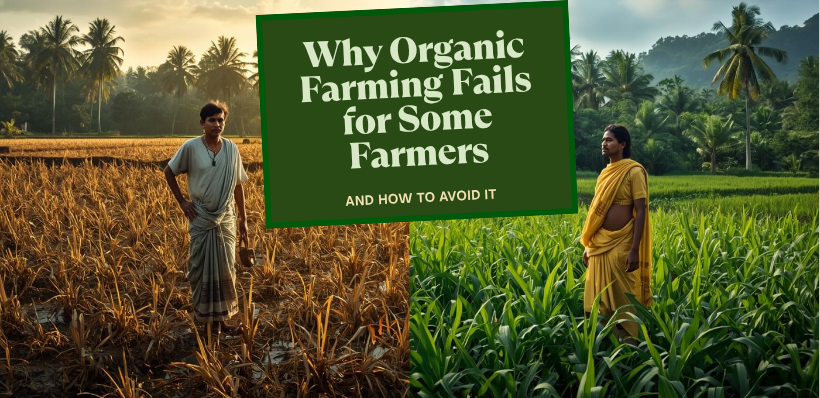
Why Organic Farming Fails for Some Farmers (And How to Avoid It)
Why organic farming fails for some farmers is a question many Indian farmers are asking today. While organic farming promises better soil health, chemical-free produce, and long-term sustainability, not every farmer achieves success immediately.
In reality, many face organic farming challenges, reduced yields, and uncertainty during the transition phase. Understanding the reasons for failure in organic farming and applying the right strategies can make all the difference between struggle and success.
What Are the Problems in Organic Farming?
Organic farming is rewarding – but it comes with its own set of challenges.
Common problems in organic farming:
- Lower initial yields
- Lack of technical knowledge
- Soil fertility imbalance
- Pest and disease management issues
- Market access and pricing concerns
These organic farming issues in India often discourage farmers, especially beginners.
The Most Common Organic Farming Mistakes
Many failures happen not because organic farming doesn’t work – but because of the most common organic farming mistakes.
1. Switching to Organic Farming Too Quickly
One of the biggest mistakes farmers make in organic farming is stopping chemical use abruptly.
Problem:
- Soil takes time to recover
- Sudden yield drop
Solution:
- Gradual transition (1–3 years)
- Combine organic inputs with soil conditioning
2. Ignoring Soil Health
Healthy soil is the foundation of successful farming.
Problem:
- Poor microbial activity
- Nutrient imbalance
Solution:
- Use compost, bio-fertilizers
- Focus on how to increase soil fertility naturally
3. Lack of Knowledge & Training
Many farmers struggle due to lack of awareness.
Problem:
- Wrong practices
- Inefficient input usage
Solution:
- Learn organic farming best practices
- Attend training programs
4. Poor Pest & Disease Management
Without chemicals, pest control becomes challenging.
Problem:
- Crop damage
- Reduced yield
Solution:
- Use natural pest control methods
- Strengthen plant immunity
5. Unrealistic Expectations
Some farmers expect instant results.
Problem:
- Frustration due to slow progress
Solution:
- Understand organic farming is a long-term investment
Why Organic Farming Fails in India
Let’s break down why organic farming fails in India specifically:
Key reasons:
- Lack of awareness among farmers
- Limited access to organic inputs
- Market challenges for organic produce
- Climate variability
- Inconsistent government support
These challenges faced by organic farmers vary across regions like Maharashtra, Karnataka, and Punjab.
Challenges of Organic Farming in Maharashtra & India
Region-specific issues:
- Water scarcity in Maharashtra
- Soil degradation in Punjab
- Climate fluctuations in South India
These make organic farming for Indian farmers more complex but still achievable with the right approach.
How to Avoid Failure in Organic Farming
Proven Solutions for Success
1. Start with Soil First
- Test soil health
- Add organic matter
- Improve microbial activity
This helps improve crop yield in organic farming
2. Learn Before You Start
- Understand crop requirements
- Follow expert guidance
Reduces beginner mistakes in organic farming
3. Adopt Gradual Transition
- Avoid sudden shift
- Combine methods initially
4. Use the Right Organic Inputs
- Bio-fertilizers
- Growth boosters
- Soil conditioners
Helps overcome problems in organic farming
5. Focus on Preventive Pest Control
- Crop rotation
- Natural sprays
- Biological solutions
6. Track & Improve Continuously
- Monitor crop performance
- Adjust techniques
Expert Insight
Farmers who adopt structured organic practices and focus on soil health see 20–40% better long-term productivity compared to inconsistent methods.
How to Succeed in Organic Farming
Success in organic farming depends on consistency and knowledge.
Tips for successful organic farming:
- Be patient and consistent
- Focus on soil health first
- Use high-quality organic inputs
- Learn from experienced farmers
- Monitor crop performance regularly
Is Organic Farming Profitable in India?
Yes – but with the right strategy.
Profit depends on:
- Crop selection
- Market access
- Input management
- Farming practices
With proper planning, organic farming can be highly profitable and sustainable.
How to Start Organic Farming Successfully
Step-by-step:
- Start small
- Choose suitable crops
- Improve soil health
- Use certified organic inputs
- Build market connections
Benefits of Sustainable Farming Practices in India
Adopting sustainable farming practices in India leads to:
- Better soil fertility
- Reduced input costs
- Higher long-term yield
- Improved farmer income
- Eco-friendly agriculture
FAQs
Q1. Why does organic farming fail?
Organic farming fails due to lack of knowledge, poor soil management, unrealistic expectations, and improper pest control methods.
Q2. What are the problems in organic farming?
Common problems include low initial yield, pest issues, soil imbalance, and lack of market access.
Q3. Is organic farming profitable in India?
Yes, organic farming is profitable when done with proper planning, soil management, and market strategy.
Q4. How to avoid mistakes in organic farming?
Farmers should focus on training, gradual transition, soil health, and using the right organic inputs.
Q5. How to increase soil fertility naturally?
Use compost, crop rotation, bio-fertilizers, and organic matter to improve soil fertility naturally.
Final Thoughts
Understanding why organic farming fails for some farmers is the first step toward success. Most failures occur due to avoidable mistakes, lack of knowledge, and improper implementation—not because organic farming doesn’t work.
By focusing on soil health, adopting the right practices, and learning continuously, farmers can overcome organic farming challenges and build a sustainable, profitable future.
Struggling with organic farming challenges?
Start using the right strategies and organic solutions today to improve soil health, boost crop yield, and achieve long-term farming success
Not Sure Which Product Is Right for Your Crop?
Our agriculture experts are ready to help you choose the best organic solution.