
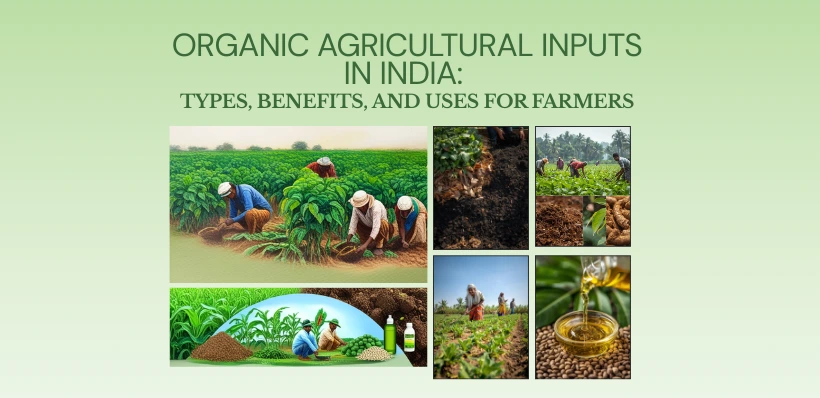
Organic Agricultural Inputs in India: Types, Benefits & Uses for Farmers
Agriculture plays a vital role in India’s economy and supports millions of farmers across the country. For many years, farmers relied heavily on chemical fertilizers and pesticides to increase crop yields. While these chemicals improved production in the short term, they also caused serious issues such as soil degradation, reduced fertility, and environmental pollution.
Today, farmers are increasingly shifting toward natural farming practices that protect soil health and promote sustainable agriculture. One of the most important approaches gaining popularity is the use of organic farming solutions that focus on natural inputs and eco-friendly farming techniques.
Organic farming encourages the use of natural fertilizers, compost, biological pest control, and plant-based nutrients. These practices help maintain soil fertility, improve crop quality, and reduce harmful environmental impacts.Across the country, farmers are discovering the benefits of using organic agricultural inputs India to produce healthier crops while protecting their land for future generations.
Organic agricultural inputs refer to natural substances used in farming to enhance soil fertility, plant growth, and crop protection without synthetic chemicals.
These inputs include compost, biofertilizers, natural pest control products, plant extracts, and organic manure. Farmers use these materials to improve soil structure, increase microbial activity, and ensure balanced crop nutrition.
By adopting natural farming practices and organic soil health products, farmers can maintain productive farmland while reducing environmental damage.
The growing demand for chemical-free food is also encouraging more farmers to adopt organic farming solutions across India.
- Organic farming uses natural inputs instead of synthetic chemicals.
- Farmers rely on compost, biofertilizers, and natural pest control methods.
- These inputs improve soil fertility and crop quality.
- Sustainable agriculture protects the environment and supports long-term farming success.
- Natural fertilizers and soil enhancers help maintain healthy farmland.
Organic agricultural inputs are natural materials used in farming to improve soil fertility, enhance crop growth, and protect plants from pests without using harmful chemicals. These inputs include compost, manure, biofertilizers, and plant-based solutions that strengthen soil health and increase productivity. Farmers are increasingly adopting organic fertilizers for farmers because they provide long-term benefits for soil quality and crop sustainability.
What Are Organic Agricultural Inputs?
Organic agricultural inputs are natural products that help improve soil fertility and crop productivity while maintaining ecological balance.
These inputs work by increasing organic matter in soil and promoting beneficial microorganisms that support plant growth.
Instead of relying on chemical fertilizers, farmers are adopting organic soil health products that naturally enrich the soil and improve nutrient availability.
Natural inputs help create a balanced farming ecosystem where soil, plants, and microorganisms work together to maintain productivity.
Types of Organic Agricultural Inputs
Organic farming relies on different types of inputs that support crop growth and soil fertility.
1. Organic Fertilizers
Organic fertilizers are natural substances that supply nutrients to crops. These fertilizers release nutrients slowly, ensuring plants receive consistent nutrition throughout their growth cycle.
Examples include:
- Farmyard manure
- Compost
- Bone meal
- Neem cake
- Vermicompost
Many farmers prefer organic fertilizers for farmers because they improve soil structure while supporting healthy plant development.
2. Biofertilizers
Biofertilizers contain beneficial microorganisms that enhance nutrient availability in soil.
Common biofertilizers include:
- Rhizobium
- Azotobacter
- Azospirillum
- Phosphate Solubilizing Bacteria
- Mycorrhiza
These microorganisms help plants absorb essential nutrients and improve overall crop yield.
Biofertilizers also support long-term soil fertility by increasing microbial activity in agricultural land.
3. Biopesticides
Biopesticides are natural pest control solutions derived from plants, microbes, or minerals.
Examples include:
- Neem oil
- Bacillus thuringiensis
- Trichoderma
- Garlic extracts
- Botanical pesticides
These natural products help protect crops without harming beneficial insects or soil microorganisms.
Using biopesticides is one of the most effective organic farming solutions for reducing chemical pesticide usage.
4. Compost
Compost is created by decomposing organic materials such as crop residues, vegetable waste, and animal manure.
It enriches soil with nutrients and improves soil texture.
Farmers widely use compost because it is cost-effective and easy to produce on farms.
Many sustainable farms combine compost with organic soil health products to further enhance soil fertility.
5. Vermicompost
Vermicompost is produced using earthworms that break down organic waste into nutrient-rich fertilizer.
Benefits include:
- Higher nutrient content
- Improved soil aeration
- Increased water retention
- Faster plant growth
Vermicompost is widely used in vegetable farming, horticulture, and commercial crop production.
6. Green Manure
Green manure involves growing plants that are later incorporated into the soil to increase organic matter.
Common green manure crops include:
- Sunhemp
- Sesbania
- Cowpea
- Dhaincha
These crops add nitrogen to the soil and improve soil fertility naturally.
Benefits of Organic Agricultural Inputs
Organic inputs provide multiple benefits for farmers, consumers, and the environment.
Improved Soil Health
Natural farming practices increase soil organic matter and support microbial life.
Healthy soil ensures better nutrient cycling and improved crop growth.
Farmers adopting organic agricultural inputs India often notice improved soil fertility within a few farming cycles.
Environmental Protection
Organic farming helps reduce soil contamination and water pollution caused by chemical fertilizers and pesticides.
Natural inputs protect biodiversity and encourage beneficial insects and microorganisms.
These practices support long-term agricultural sustainability.
Better Crop Quality
Crops grown using natural inputs often have better flavor, higher nutritional value, and improved shelf life.
Consumers increasingly prefer organic food products due to health benefits and reduced chemical exposure.
Cost Efficiency for Farmers
Many organic inputs can be produced locally using farm waste and natural materials.
Farmers who adopt organic farming solutions can reduce their dependency on expensive chemical fertilizers.
Sustainable Agriculture
Organic farming supports environmentally responsible agriculture.
Using natural inputs helps maintain soil productivity for future generations.
Combining compost, biofertilizers, and organic soil health products can significantly improve soil structure and fertility.
Statistics Section
Organic agriculture is expanding rapidly in India due to increasing awareness and consumer demand.
Key statistics include:
- India is one of the largest producers of organic food in the world.
- Millions of farmers are now practicing organic farming across the country.
- Organic food demand is growing at nearly 20% annually.
- The government is supporting sustainable farming through various agricultural schemes.
These trends highlight the growing importance of organic farming solutions in modern agriculture.
Table
Organic Input | Example | Benefit |
Organic Fertilizer | Farmyard manure | Improves soil fertility |
Biofertilizer | Rhizobium | Nitrogen fixation |
Biopesticide | Neem oil | Natural pest control |
Compost | Plant waste compost | Improves soil structure |
Vermicompost | Earthworm compost | High nutrient content |
Green Manure | Sunhemp | Adds organic matter |
Farmers and agriculture professionals often search for organic farming information online. Common voice search questions include:
- What are organic agricultural inputs?
- How do organic fertilizers improve soil health?
- What are the benefits of natural farming methods?
- Which natural fertilizers are best for crops?
- How can farmers improve soil fertility naturally?
- What are the best organic inputs for agriculture?
Conclusion
Organic agriculture is becoming an essential part of sustainable farming in India. Farmers are increasingly adopting natural practices that protect soil fertility while producing healthy crops.
The use of compost, biofertilizers, and plant-based pest control methods allows farmers to reduce chemical dependency and maintain long-term soil productivity.
By implementing effective organic farming solutions, farmers can improve crop quality, increase profitability, and support environmental sustainability.
As awareness about healthy food and eco-friendly agriculture continues to grow, the demand for organic farming practices and natural agricultural inputs will continue to rise across India.
FAQs
- What are examples of organic agricultural inputs?
Examples of organic agricultural inputs include compost, vermicompost, farmyard manure, biofertilizers, neem cake, green manure, and plant-based pest control products. These inputs naturally improve soil fertility and crop health without using synthetic chemicals.
- How do organic agricultural inputs improve soil fertility?
Organic agricultural inputs increase soil organic matter, support beneficial microorganisms, and enhance nutrient availability. This improves soil structure, water retention, and long-term soil productivity for sustainable farming.
- What is the difference between organic fertilizers and chemical fertilizers?
Organic fertilizers come from natural sources such as compost, manure, and plant residues, while chemical fertilizers are synthetic products manufactured in factories. Organic fertilizers improve soil health over time, whereas chemical fertilizers mainly provide short-term nutrients.
- Which crops benefit the most from organic farming?
Crops such as vegetables, fruits, cereals, pulses, spices, and medicinal plants benefit significantly from organic farming. Organic inputs help produce healthier crops with better taste and higher nutritional value.
- What are the benefits of organic farming for farmers?
Organic farming benefits farmers by improving soil health, reducing chemical input costs, increasing crop quality, and creating opportunities to sell produce at premium market prices.
- How can farmers start using organic agricultural inputs?
Farmers can start by replacing chemical fertilizers with compost, vermicompost, and biofertilizers. They can also adopt natural pest control methods like neem-based products and plant extracts to protect crops.
- Are organic agricultural inputs environmentally friendly?
Yes, organic agricultural inputs are environmentally friendly because they reduce soil pollution, protect water resources, and support biodiversity by promoting natural farming ecosystems.
- What role do microorganisms play in organic farming?
Microorganisms such as bacteria and fungi help break down organic matter, fix nitrogen in the soil, and make nutrients more accessible to plants. This improves plant growth and soil fertility naturally.
- Why is organic farming becoming popular in India?
Organic farming is becoming popular in India due to rising demand for chemical-free food, increasing awareness about soil health, and government initiatives promoting sustainable agriculture.
Not Sure Which Product Is Right for Your Crop?
Our agriculture experts are ready to help you choose the best organic solution.