
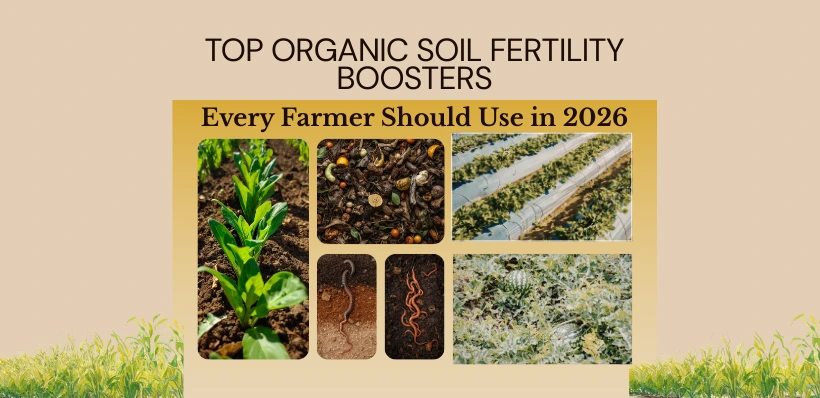
Top Organic Soil Fertility Boosters Every Farmer Should Use in 2026
Agriculture is the backbone of food production and economic stability in many countries, especially in regions where farming supports millions of livelihoods. At the center of successful agriculture lies one critical factor — soil fertility. Healthy soil contains balanced nutrients, beneficial microorganisms, organic matter, and adequate moisture levels that allow crops to grow efficiently and produce high yields.Over the past few decades, however, modern agricultural practices have placed immense pressure on soil ecosystems. Continuous cropping, excessive tillage, and heavy use of chemical fertilizers have gradually degraded soil quality in many agricultural regions. While synthetic fertilizers can increase crop production temporarily, they often fail to improve the long-term health of the soil.
Farmers are now recognizing the importance of restoring soil fertility using sustainable farming practices. Improving soil health is essential not only for increasing crop productivity but also for protecting farmland for futuregenerations. Agricultural experts increasingly recommend the use of organic soil health products to restore soil structure and support beneficial microorganisms. These natural solutions help rebuild the biological balance of soil while improving nutrient availability for crops.Across the country, more farmers are turning toward organic agricultural inputs India to reduce dependence on chemical fertilizers and adopt environmentally responsible farming methods.Organic soil fertility boosters play a major role in this transition toward sustainable agriculture. These natural inputs help farmers maintain soil productivity while protecting ecosystems and improving crop quality.
Organic soil fertility boosters are natural agricultural inputs used to improve soil structure, increase microbial activity, and enhance nutrient availability for plants. These solutions work by restoring the biological balance of soil rather than simply supplying nutrients.Farmers rely on various natural inputs such as compost, vermicompost, microbial fertilizers, plant extracts, and biofertilizers to improve soil fertility. Many of these inputs fall under the category of soil fertility boosters organic because they improve soil health without damaging the environment.
Adopting natural soil improvement techniques helps farmers build resilient farming systems that maintain soil fertility and crop productivity for many years.
- Organic soil boosters restore soil fertility naturally
- Natural inputs improve soil structure and microbial activity
- Compost, vermicompost, and biofertilizers support crop growth
- Sustainable farming reduces dependency on chemical fertilizers
- Healthy soil ensures long-term agricultural productivity
Organic soil fertility boosters are natural agricultural inputs that improve soil structure, increase microbial activity, and enhance nutrient availability for sustainable crop growth.
These solutions include compost, biofertilizers, vermicompost, microbial inoculants, and plant-based formulations. Instead of delivering nutrients instantly like chemical fertilizers, organic soil boosters improve the entire soil ecosystem.
Farmers often combine these natural solutions with organic fertilizers for farmers to maintain balanced soil nutrition and improve crop performance.
What Are Organic Soil Fertility Boosters?
Organic soil fertility boosters are natural materials added to soil to improve its physical, chemical, and biological characteristics. Their primary goal is to enhance soil fertility while maintaining ecological balance.
These boosters increase soil organic matter, improve soil aeration, and support microbial life that helps plants absorb nutrients more efficiently.
Unlike synthetic fertilizers, which often provide short-term benefits, soil fertility boosters organic focus on long-term soil health. By improving soil ecosystems, these inputs create an environment where crops can grow stronger and more resilient.
Examples of organic soil fertility boosters include compost, vermicompost, green manure, microbial fertilizers, and plant-based soil enhancers.
These natural inputs are widely used in sustainable farming systems and organic agriculture.
Why Soil Fertility Is Important for Farmers
Soil fertility is one of the most important factors determining crop productivity and agricultural sustainability. Fertile soil contains the nutrients necessary for plant growth and supports beneficial microorganisms that help convert organic matter into plant-available nutrients.
When soil fertility declines, crops may suffer from nutrient deficiencies, reduced root development, and increased vulnerability to pests and diseases.
Several factors contribute to declining soil fertility
- Excessive use of chemical fertilizers
- Soil erosion caused by wind or rainfall
- Loss of organic matter from intensive farming
- Reduced microbial diversity in soil
To overcome these challenges, farmers are increasingly adopting natural farming practices that restore soil fertility.
One effective approach is the use of organic fertilizers for farmers, which gradually release nutrients and improve soil organic matter levels.
By incorporating natural inputs into their farming systems, farmers can maintain soil productivity while protecting the environment.
Top Organic Soil Fertility Boosters Farmers Should Use
Farmers have many options when it comes to improving soil fertility using natural agricultural inputs. The following organic boosters are widely used in sustainable agriculture.
Vermicompost
- Vermicompost is produced through the decomposition of organic waste by earthworms. This process transforms organic material into nutrient-rich fertilizer that improves soil health.
- Farmers often consider vermicompost one of the most effective organic soil health products because it increases soil organic matter and microbial activity.
Benefits of vermicompost include:
- Improved soil structure
- Increased nutrient availability
- Enhanced root growth
- Better soil moisture retention
Vermicompost also helps plants absorb nutrients more efficiently, leading to stronger plant growth.
Biofertilizers
- Biofertilizers are microbial formulations that contain beneficial bacteria or fungi capable of improving nutrient availability in soil.
- These microorganisms help convert nutrients such as nitrogen and phosphorus into forms that plants can absorb.
- Biofertilizers are commonly used as part of organic agricultural inputs India, helping farmers maintain soil fertility while reducing reliance on chemical fertilizers.
- Some commonly used biofertilizers include Rhizobium, Azotobacter, and Mycorrhiza.
Seaweed Extracts
- Seaweed extracts are natural plant growth stimulants derived from marine algae. These extracts contain essential minerals, vitamins, amino acids, and plant hormones that support crop growth.
- Seaweed extracts help improve plant metabolism and enhance resistance to environmental stress such as drought and high temperatures.
- Farmers often apply seaweed-based fertilizers alongside organic soil health products to improve crop productivity and soil biological activity.
Soil Conditioners
- Soil conditioners are natural substances that improve soil structure and increase organic matter content.
- Healthy soil requires proper aeration and water retention for plant roots to develop effectively. Soil conditioners help create these conditions by improving soil texture.
- Many soil conditioners are categorized under organic agricultural inputs India because they enhance soil fertility without harming the environment.
- Improved soil structure also reduces erosion and increases nutrient availability for crops.
Microbial Soil Enhancers
- Microbial soil enhancers contain beneficial bacteria and fungi that improve soil biological activity.
- These microorganisms break down organic matter and release nutrients that plants can absorb.
- Farmers frequently use these biological solutions as organic soil health products to maintain balanced soil ecosystems and improve crop health.
- Microbial soil enhancers also help increase soil biodiversity and support long-term agricultural sustainability.
Statistics Section
Organic agriculture is growing rapidly around the world as farmers recognize the importance of soil health and environmental sustainability.
Some important statistics include:
- India is one of the largest producers of organic food globally
- Millions of farmers are adopting sustainable farming practices
- Demand for organic agricultural products continues to increase every year
- Government programs encourage the use of natural farming inputs
These trends demonstrate the increasing adoption of organic agricultural inputs India as farmers seek sustainable solutions for improving soil fertility.
Organic Input | Example | Benefit |
Compost | Farm waste compost | Improves soil fertility |
Biofertilizer | Rhizobium | Nitrogen fixation |
Vermicompost | Earthworm compost | Nutrient-rich organic fertilizer |
Seaweed Extract | Marine algae extract | Plant growth stimulation |
Soil Conditioner | Organic soil blends | Improved soil structure |
What are organic soil fertility boosters?
Organic soil fertility boosters are natural agricultural inputs that improve soil nutrients, microbial activity, and plant growth without synthetic chemicals.
Which natural fertilizers improve soil fertility?
Compost, vermicompost, biofertilizers, and plant-based extracts are among the most effective natural fertilizers used to improve soil fertility.
How can farmers restore soil health naturally?
Farmers can restore soil health by adding organic matter, using microbial fertilizers, practicing crop rotation, and applying natural soil enhancers.
What are organic soil fertility boosters?
Organic soil fertility boosters are natural agricultural inputs that improve soil nutrients, microbial activity, and plant growth without synthetic chemicals.
Why are organic fertilizers beneficial for farmers?
Organic fertilizers improve soil health, enhance nutrient availability, and support sustainable agriculture.
Do organic fertilizers increase crop yield?
Yes, organic fertilizers improve soil quality and support stronger plant growth, which can increase crop productivity.
Are organic soil boosters environmentally friendly?
Yes, organic soil boosters reduce chemical pollution and help protect soil ecosystems.
Why is soil health important for sustainable agriculture?
Healthy soil improves crop productivity, supports microbial activity, and protects the environment.
Conclusion
Soil fertility is the foundation of sustainable agriculture and long-term crop productivity. Healthy soil ecosystems support plant growth, improve water retention, and enhance nutrient availability.
Natural farming practices provide effective solutions for restoring degraded soil and maintaining agricultural productivity.
By adopting compost, microbial fertilizers, and other natural inputs, farmers can improve soil health while reducing dependence on chemical fertilizers.
The growing adoption of organic soil health products and sustainable farming solutions will continue to shape the future of agriculture.
Healthy soil not only increases crop productivity but also protects the environment and ensures food security for future generations.
FAQs
- What are organic soil fertility boosters?
Organic soil fertility boosters are natural agricultural inputs that improve soil nutrients, microbial activity, and plant growth without synthetic chemicals. These inputs enhance soil structure, increase organic matter, and support sustainable crop production.
- Why are organic fertilizers important for farmers?
Organic fertilizers are important for farmers because they improve soil health, enhance nutrient availability, and support beneficial microorganisms. They also help maintain long-term soil fertility while reducing dependency on chemical fertilizers.
- Do organic fertilizers increase crop productivity?
Yes, organic fertilizers can increase crop productivity by improving soil quality and nutrient availability. Healthy soil supports stronger plant growth, better root development, and improved crop yields over time.
- Are organic soil fertility boosters environmentally friendly?
Yes, organic soil fertility boosters are environmentally friendly because they reduce chemical pollution, improve soil biodiversity, and protect water resources. They help maintain ecological balance while supporting sustainable agriculture.
- What are the best organic inputs for improving soil fertility?
Some of the best organic inputs for improving soil fertility include compost, vermicompost, biofertilizers, seaweed extracts, green manure crops, and microbial soil enhancers. These inputs increase organic matter and improve nutrient cycling in soil.
- How can farmers improve soil fertility naturally?
Farmers can improve soil fertility naturally by using compost, vermicompost, crop rotation, biofertilizers, and organic soil conditioners. These practices increase soil organic matter and support beneficial microorganisms.
- What role do microorganisms play in soil fertility?
Microorganisms break down organic matter and convert nutrients into forms that plants can absorb. They also improve soil structure, increase nutrient availability, and support healthy plant growth.
- Can organic farming maintain high crop productivity?
Yes, organic farming can maintain high crop productivity when proper soil management practices are used. Healthy soil ecosystems improve nutrient cycling and support long-term agricultural productivity.
- Why is soil health important for sustainable agriculture?
Soil health is essential for sustainable agriculture because it supports plant growth, conserves water, and maintains nutrient balance. Healthy soil ensures long-term crop productivity and protects the environment.
Not Sure Which Product Is Right for Your Crop?
Our agriculture experts are ready to help you choose the best organic solution.