
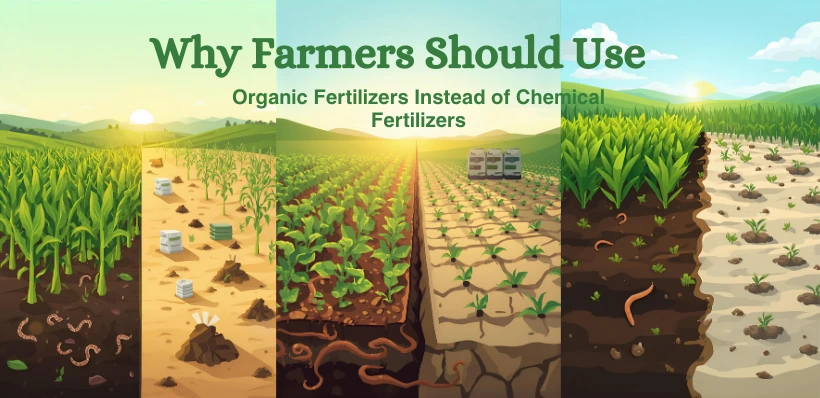
Why Farmers Should Use Organic Fertilizers Instead of Chemical Fertilizers
Agriculture is the backbone of India’s economy, and farmers constantly look for better ways to improve crop productivity while maintaining soil health. For decades, chemical fertilizers were widely used to increase crop yields quickly. However, excessive use of chemicals has led to soil degradation, reduced fertility, water pollution, and long-term environmental damage.
Today, many farmers are shifting toward organic farming solutions that promote sustainable agriculture and long-term productivity.
Organic fertilizers play a crucial role in restoring soil fertility, improving crop quality, and supporting eco-friendly farming practices. Unlike chemical fertilizers, organic inputs nourish the soil naturally and enhance the biological activity essential for plant growth.
This blog explains why farmers should adopt organic fertilizers instead of chemical fertilizers and how they contribute to healthier soil, better crops, and sustainable agriculture.
Organic fertilizers are natural nutrient sources derived from plant, animal, or mineral materials that improve soil health and crop productivity. Unlike chemical fertilizers, organic fertilizers enhance microbial activity, improve soil structure, and support long-term agricultural sustainability.
Farmers in India are increasingly adopting organic farming solutions to restore soil fertility and reduce environmental damage caused by synthetic chemicals. The use of organic soil health products, organic manures for crops, and other organic agricultural inputs India helps improve crop nutrition while maintaining ecological balance.
Organic fertilizers release nutrients slowly, ensuring that crops receive balanced nourishment throughout their growth cycle. This improves root development, water retention, and soil microbial activity.
By adopting sustainable farming practices and using organic inputs, farmers can increase crop productivity, reduce long-term input costs, and protect soil fertility for future generations.
Understanding Organic Fertilizers
Organic fertilizers are natural substances derived from plant, animal, or mineral sources. They provide essential nutrients to crops while also improving soil structure and microbial activity. These fertilizers include compost, farmyard manure, vermicompost, green manure, and other organic manures for crops.
Unlike synthetic fertilizers that deliver nutrients rapidly, organic fertilizers release nutrients slowly and steadily. This ensures that plants receive balanced nutrition throughout their growth cycle.
In India, the demand for organic agricultural inputs India has grown significantly due to increasing awareness about sustainable farming practices and the need to maintain soil health for future generations.
Problems Caused by Chemical Fertilizers
Chemical fertilizers may provide quick results, but their long-term impact can harm soil and the environment.
1. Soil Degradation
Continuous use of chemical fertilizers reduces soil organic matter and kills beneficial microorganisms. Over time, this leads to poor soil structure and decreased fertility. Farmers then need higher doses of fertilizers each year to maintain the same yield.
2. Water Pollution
Chemical fertilizers often leach into groundwater and nearby water bodies. This contamination affects drinking water sources and aquatic ecosystems.
3. Reduced Soil Microbial Activity
Healthy soil contains billions of microorganisms that help break down nutrients for plants. Excessive chemicals disrupt this ecosystem, reducing soil productivity.
4. Increased Farming Costs
Chemical fertilizers become more expensive over time. Farmers often spend a large portion of their budget on fertilizers, reducing overall profitability.
Because of these issues, farmers are now exploring organic farming solutions that restore soil health and reduce dependency on chemicals.
Benefits of Using Organic Fertilizers
1. Improves Soil Health
One of the biggest advantages of organic fertilizers is their ability to improve soil structure and fertility. Organic matter increases the soil’s ability to retain moisture and nutrients.
Many organic soil health products contain beneficial microbes that enhance nutrient availability and promote root development. This helps crops grow stronger and healthier.
2. Enhances Microbial Activity
Healthy soil requires active microbial life. Organic fertilizers encourage the growth of beneficial microorganisms that help decompose organic matter and release nutrients for plants.
These microorganisms also improve soil aeration and help maintain a balanced soil ecosystem.
3. Sustainable Crop Production
Organic fertilizers support sustainable agriculture by reducing chemical dependency. Farmers who adopt organic farming solutions can maintain soil fertility for many years without damaging the environment.
4. Better Crop Quality
Crops grown with organic fertilizers often have better taste, higher nutritional value, and longer shelf life. Consumers increasingly prefer organically grown produce because it is healthier and free from harmful chemical residues.
5. Improved Water Retention
Organic matter in soil helps retain water, which is especially important in drought-prone areas. This reduces irrigation requirements and improves crop resilience during dry periods.
Role of Organic Manures in Crop Nutrition
Organic manures play a vital role in providing balanced nutrients to crops. They supply nitrogen, phosphorus, potassium, and essential micronutrients required for plant growth.
Common types of organic manures for crops include:
- Farmyard manure
- Compost
- Vermicompost
- Green manure
- Poultry manure
These organic materials improve soil fertility naturally and support long-term agricultural productivity.
By using organic farming solutions, farmers can reduce their reliance on synthetic fertilizers and maintain healthy soil ecosystems.
Importance of Organic Agricultural Inputs in India
India has a long tradition of natural farming and organic practices. However, modern agriculture introduced chemical fertilizers that gradually replaced traditional methods.
Today, there is a growing movement toward using organic agricultural inputs India to restore soil health and promote sustainable farming.
Organic inputs include:
- Organic fertilizers
- Biofertilizers
- Organic pesticides
- Compost-based soil enhancers
These inputs help farmers improve crop yields while protecting the environment.
Government initiatives and awareness programs are also encouraging farmers to adopt organic practices across the country.
Organic Soil Health Products and Their Impact
Maintaining soil health is essential for sustainable agriculture. Organic soil health products improve soil fertility by increasing organic matter and microbial activity.
These products help in:
- Enhancing nutrient absorption
- Improving soil structure
- Increasing water retention capacity
- Promoting root growth
- Supporting beneficial microorganisms
When farmers use organic fertilizers along with organic soil health products, they create a balanced ecosystem that supports healthy crop growth.
Organic Farming Solutions for Sustainable Agriculture
Modern farmers need practical and effective organic farming solutions that provide consistent results. Organic fertilizers and soil enhancers offer a sustainable alternative to chemical fertilizers.
Some effective organic farming practices include:
- Crop rotation
- Compost application
- Green manuring
- Integrated nutrient management
- Use of biofertilizers
These practices help maintain soil fertility and improve crop productivity over time.
Farmers who adopt organic farming solutions can achieve better long-term results without harming the environment.
Economic Benefits for Farmers
Switching to organic fertilizers can also benefit farmers economically.
Lower Input Costs
Organic fertilizers can often be produced on farms using crop residues, animal waste, and composting techniques. This reduces dependency on expensive chemical fertilizers.
Higher Market Demand
Organic produce is increasingly popular among consumers. Farmers who grow organic crops can often sell their products at higher prices in the market.
Long-Term Soil Productivity
Healthy soil produces better crops year after year. By maintaining soil fertility through organic inputs, farmers ensure sustainable income from agriculture.
Environmental Benefits of Organic Fertilizers
Organic fertilizers are environmentally friendly and contribute to ecological balance.
Key environmental benefits include:
- Reduced soil and water pollution
- Improved biodiversity in agricultural fields
- Lower greenhouse gas emissions
- Conservation of natural resources
Using organic farming solutions helps protect ecosystems while supporting agricultural productivity.
Future of Organic Farming in India
The future of agriculture lies in sustainable and environmentally responsible practices. With increasing awareness about soil health and food safety, many farmers are moving toward organic methods.
The demand for organic agricultural inputs India continues to grow as farmers recognize the benefits of natural farming.
By adopting organic fertilizers, farmers can protect their soil, improve crop quality, and ensure long-term sustainability for their farms.
Farmers should choose organic fertilizers instead of chemical fertilizers because they enhance soil health, boost microbial activity, and support sustainable agriculture.
Key Benefits of Organic Fertilizers
- Strengthen soil structure and improve long-term fertility
- Increase crop productivity naturally
- Reduce soil and water pollution
- Improve nutrient absorption in plants
- Promote environmentally sustainable farming
Using organic farming solutions, organic soil health products, organic manures for crops, and other organic agricultural inputs India enables farmers to maintain fertile soil while producing healthier and higher-quality crops naturally.
Conclusion
Chemical fertilizers may provide short-term results, but their long-term impact on soil health and the environment is harmful. Organic fertilizers offer a natural and sustainable alternative that improves soil fertility, enhances microbial activity, and supports healthy crop growth.
By adopting organic farming solutions, farmers can restore soil productivity and reduce their dependence on chemicals. The use of organic soil health products, organic agricultural inputs India, and organic manures for crops helps create a balanced agricultural ecosystem that benefits both farmers and the environment.
As agriculture continues to evolve, organic fertilizers will play a crucial role in building a sustainable future for farming and ensuring healthy food production for generations to come.
Frequently Asked Questions
- Why should farmers use organic fertilizers instead of chemical fertilizers?
- Organic fertilizers improve soil health, increase microbial activity, and provide long-lasting nutrients to crops. Unlike chemical fertilizers, they do not damage soil fertility or pollute water sources.
- What are organic farming solutions?
- Organic farming solutions include natural farming practices and inputs that improve soil fertility and crop productivity without harmful chemicals. These solutions involve compost, biofertilizers, crop rotation, and organic fertilizers.
- What are organic soil health products?
- Organic soil health products are natural formulations that enhance soil structure, improve microbial activity, and increase nutrient availability. These products help maintain fertile soil for sustainable crop production.
- What are the most common organic manures for crops?
- The most commonly used organic manures for crops include:
- Farmyard manure
- Compost
- Vermicompost
- Green manure
- Poultry manure
- These natural fertilizers provide essential nutrients while improving soil fertility.
- What are organic agricultural inputs in India?
- Organic agricultural inputs India refers to natural farming products used to improve soil fertility and crop growth. These inputs include organic fertilizers, biofertilizers, compost, microbial solutions, and plant-based pest control products.
- Do organic fertilizers improve crop yield?
- Yes, organic fertilizers improve crop yield by enhancing soil health and microbial activity. Over time, healthy soil produces stronger plants and better harvests compared to chemical-dependent farming.
- Are organic fertilizers safe for the environment?
- Organic fertilizers are environmentally friendly because they reduce soil degradation, prevent water contamination, and support biodiversity in agricultural ecosystems.
- Can farmers completely replace chemical fertilizers with organic fertilizers?
- Yes, many farmers successfully replace chemical fertilizers by using a combination of organic farming solutions, compost, biofertilizers, and organic soil conditioners. This approach improves long-term soil fertility and sustainable crop production.
Not Sure Which Product Is Right for Your Crop?
Our agriculture experts are ready to help you choose the best organic solution.